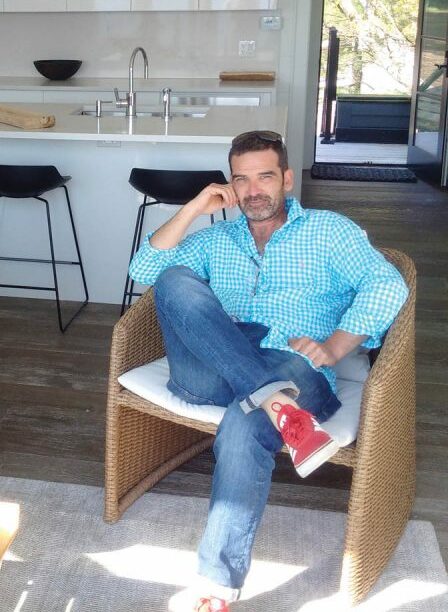
“In today’s recreation marketplace, you’ve got landscape designers designing outdoor kitchens. We believe that it is better to get a kitchen designer to design a kitchen.”
– Darragh Hughes,
Thomas James Cabinetry
Humans love to cook and eat outside as often as possible. Many of today’s best kitchen designers are recognizing that, until now, we have failed to innovate our outdoor cooking spaces with the same care and attention to detail as their indoor counterparts.
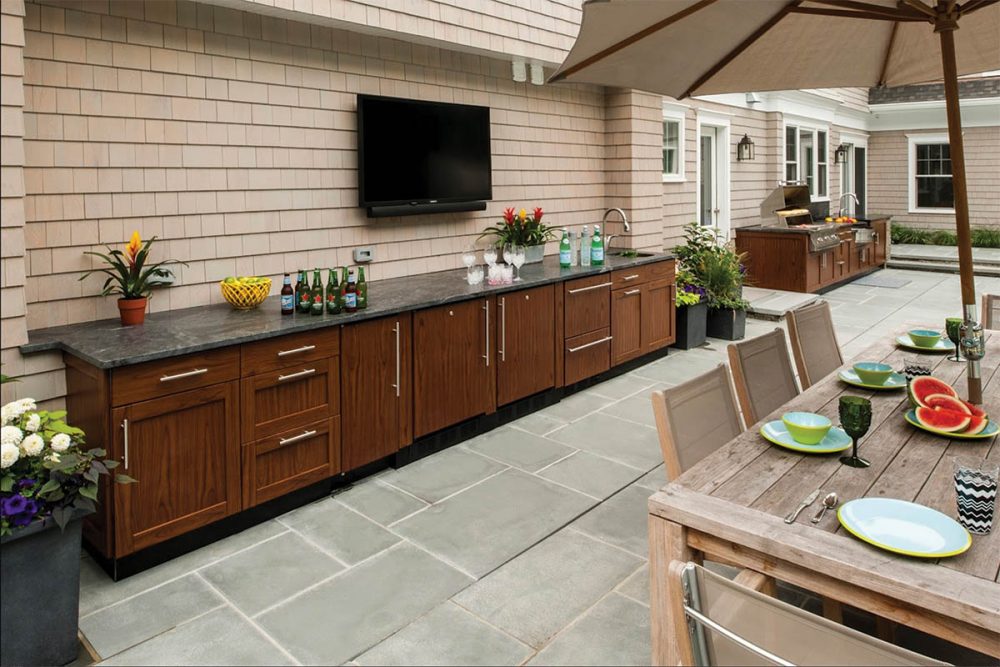
When it comes to cooking outdoors, it would seem that once our early ancestors discovered the benefits of having at least a rudimentary shelter over their cooking fires, they never looked back. At least not for many centuries. Cooking outdoors by preference was not truly formalized until the early 1900s when the first mass-produced and mass-marketed BBQ came onto the scene. Today’s outdoor kitchens, by stark contrast, offer homeowners and cottagers the very same conveniences of their everyday kitchens, including grills, refrigerators, sinks, pizza ovens, beer taps, dishwashers, microwaves, ovens, moveable islands, beverage carts, and more. Darragh Hughes, founder of Thomas James Cabinetry in Milford Bay, feels we’ve arrived at the point where there is no longer a need to forego any level of modern convenience in an outdoor kitchen.
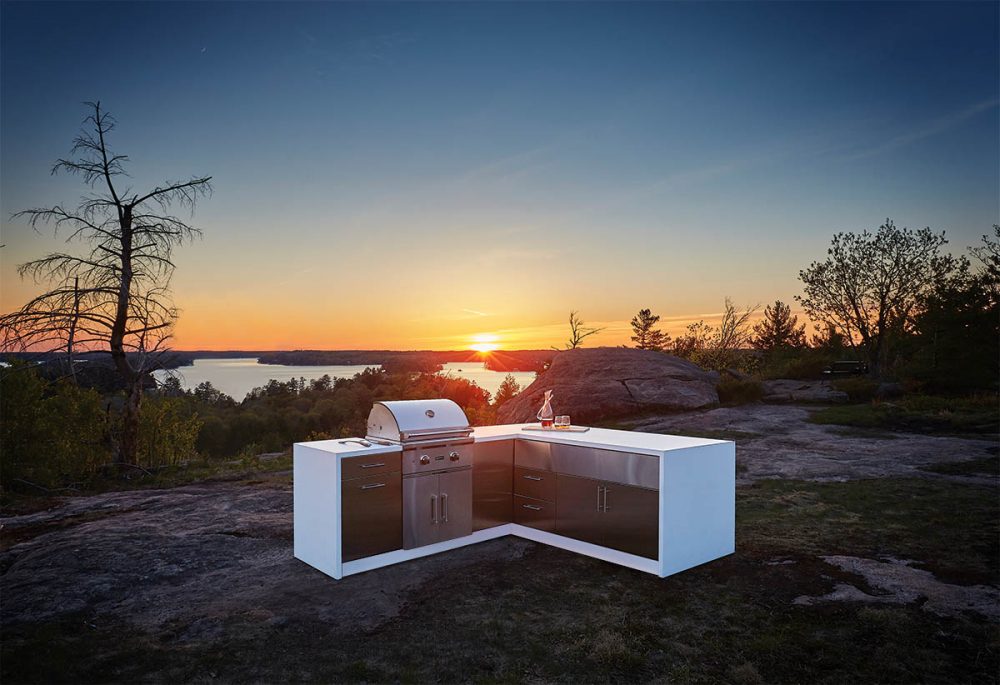
“The question of inside-out functionality is especially true when it comes to recreational properties, where time spent with friends and loved ones is limited and prized,” says Darragh. “Having the convenience of a fully functioning outdoor kitchen, right where the entertaining and leisure activities are taking place, means less time—potentially no time— travelling back and forth to the main kitchen.”
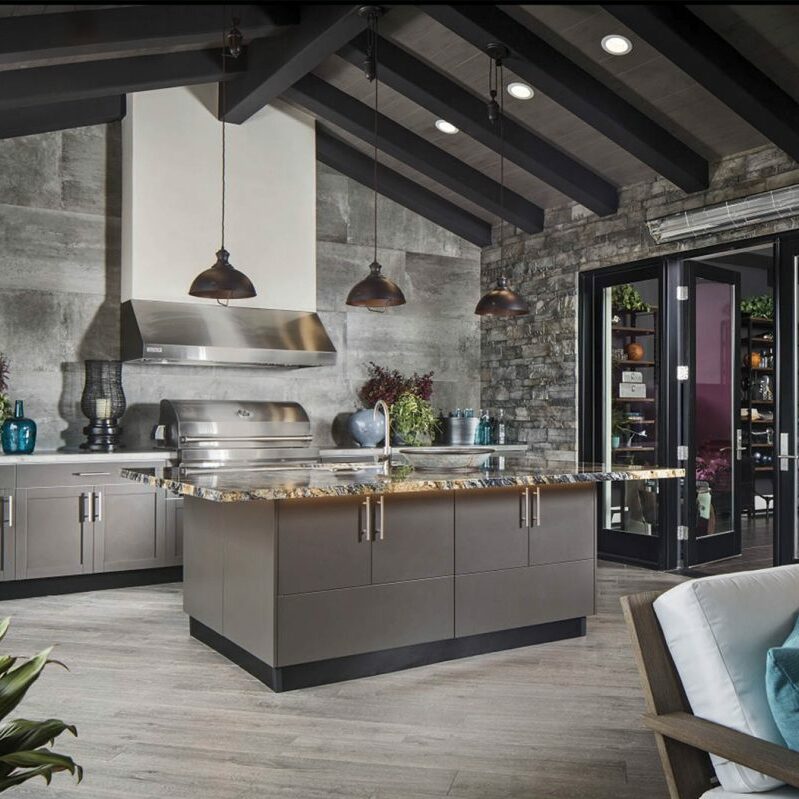
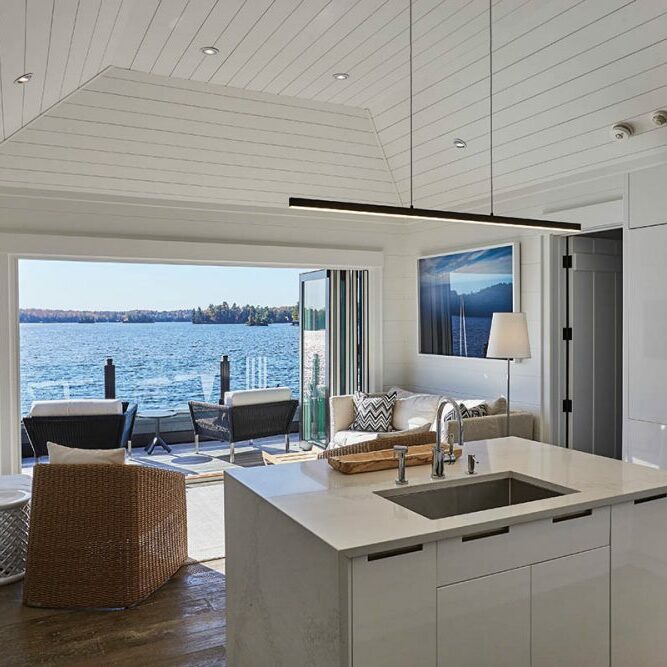
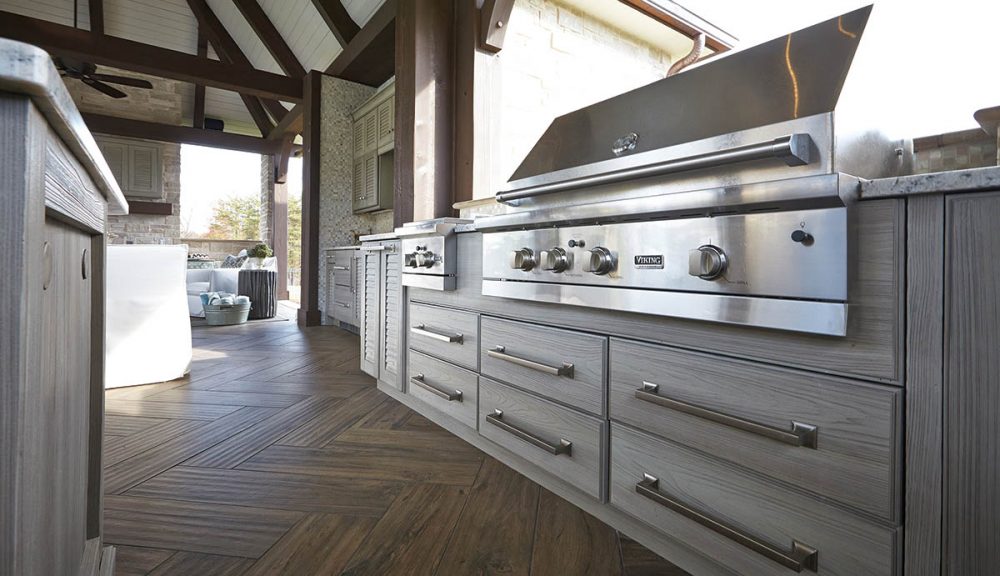
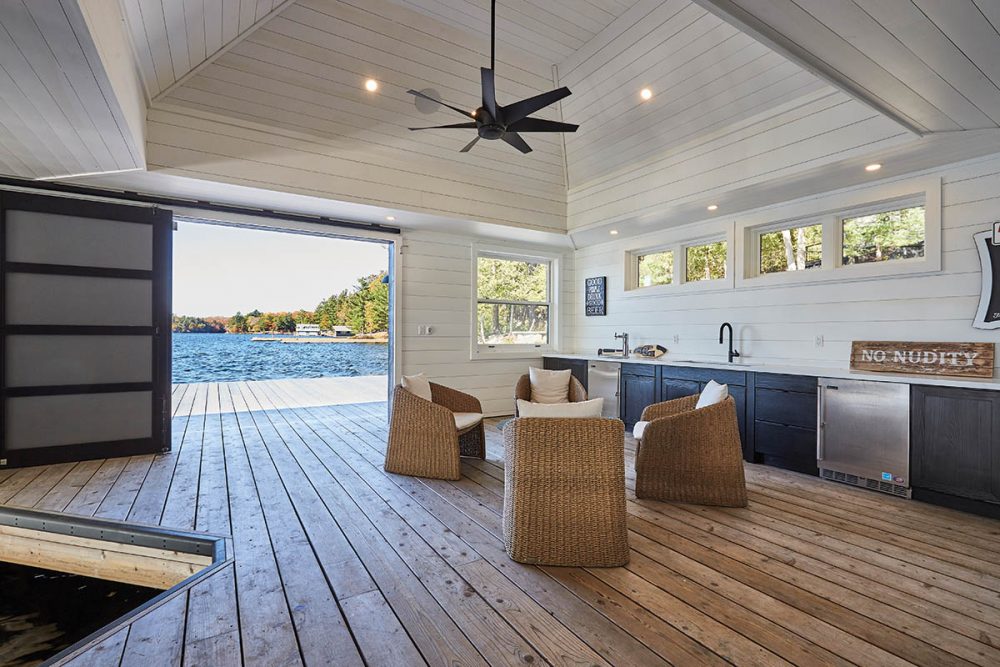
“With every project, we hear that the outdoor kitchen has drastically changed the dynamic of the whole cottage experience for the better,” says Alicia Hughes, chief designer at Thomas James. For example, they recently built an outdoor living/kitchen pavilion space for clients who have a large extended family ranging from infant grandchildren through to octogenerians. They wanted an outdoor space by the beach that was designed to cater to the needs of grandparents, parents, their babies, and the older children as they enjoyed time by the water. “They told us that for years they had argued over who would trudge back to the main cottage, returning with cold drinks or a fistful of freezies,” recalls Alicia. Along with plenty of seating areas, the new space features a freezer and refrigerator, device-charging stations, and storage for tableware, dry goods, and toys.
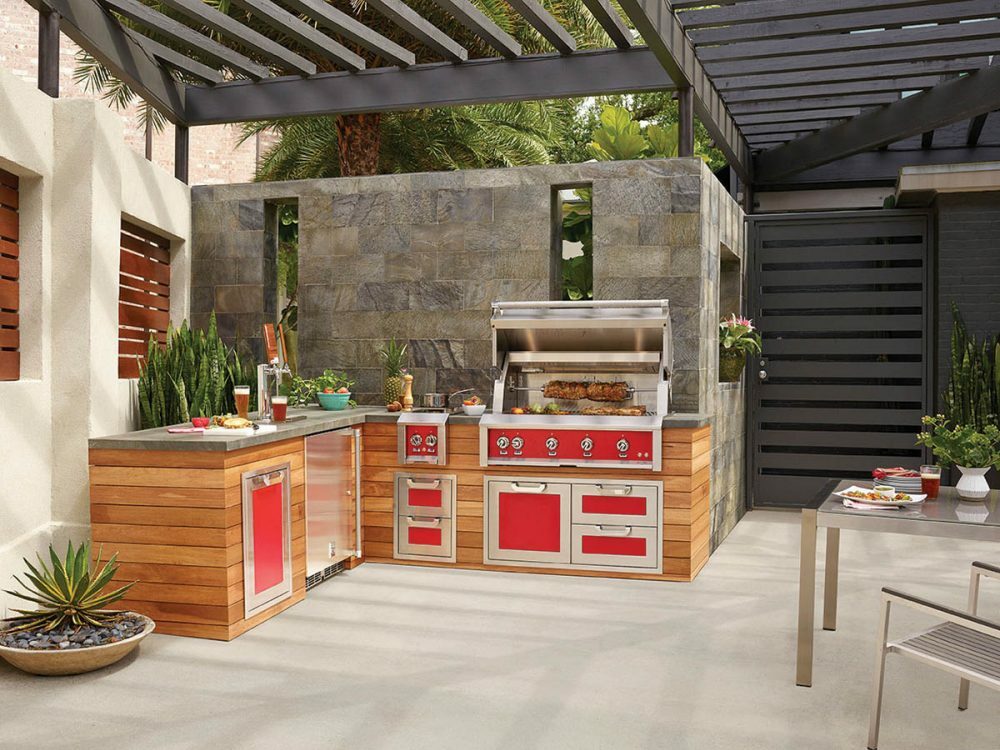
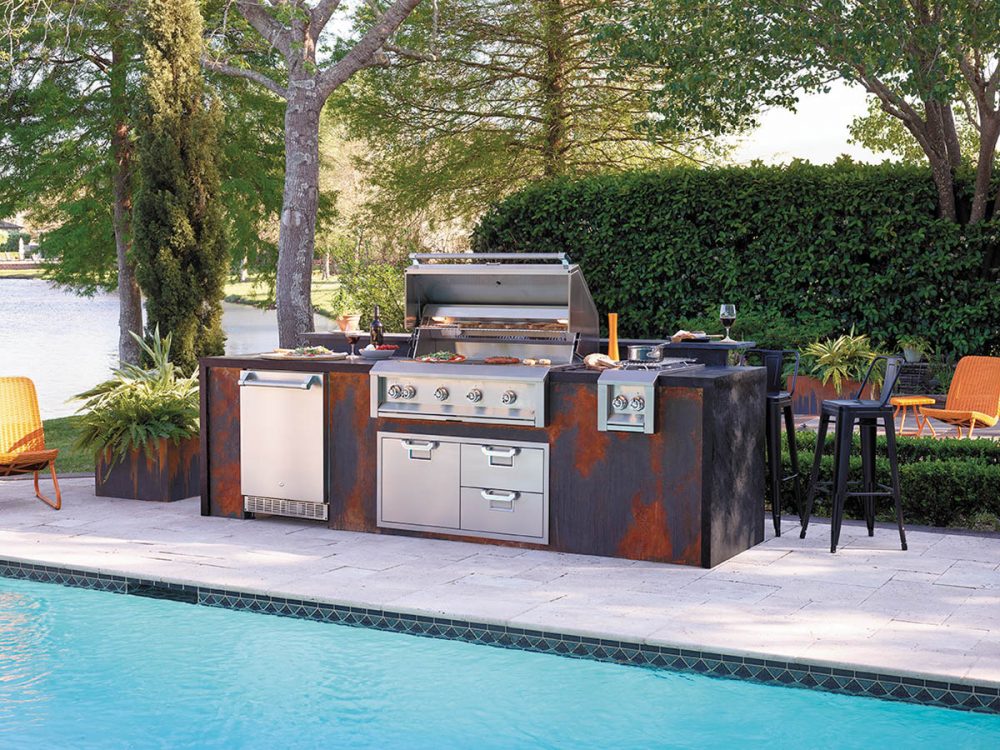
From a materials standpoint, outdoor gathering areas created from wood or light gauge steel will rot away in time. “Even marine grade plywood will not stand the test of time,” explains Darragh. “It will eventually break down.
Building any structure that is expected to perform and survive through Canada’s four seasons requires industry-specific materials that are designed to last a lifetime.” Fortunately, today’s selection of enduring materials is practically limitless. It includes weather-tight cabinetry, weather-resistant appliances, and lifetime-guaranteed cabinet hardware. Thomas James Cabinetry is a licensed dealer of Danver, Hestan, and NatureKast outdoor kitchen products.
Traditional indoor countertop options are not always suitable for use in outdoor applications. Along with stainless steel and porcelain, a recently developed product has the Thomas James team excited. Lapitec is an engineered material with an antimicrobial surface, available in a variety of colours. To manufacture it, high-quality ceramic materials are selected and bonded together under extreme amounts of heat and pressure, recreating a natural process. The Lapitec stone is 100 percent mineral with no resin or hydrocarbon-based binder elements.
“Lapitec does not change over time and UV light has no effect on it. So as long as you clean it on a regular basis, it will always look exactly how it did when you first had it installed,” Darragh explains. It’s also incredibly hard-wearing and resistant to almost everything, including heat, scratches, impact, and acidic substances.
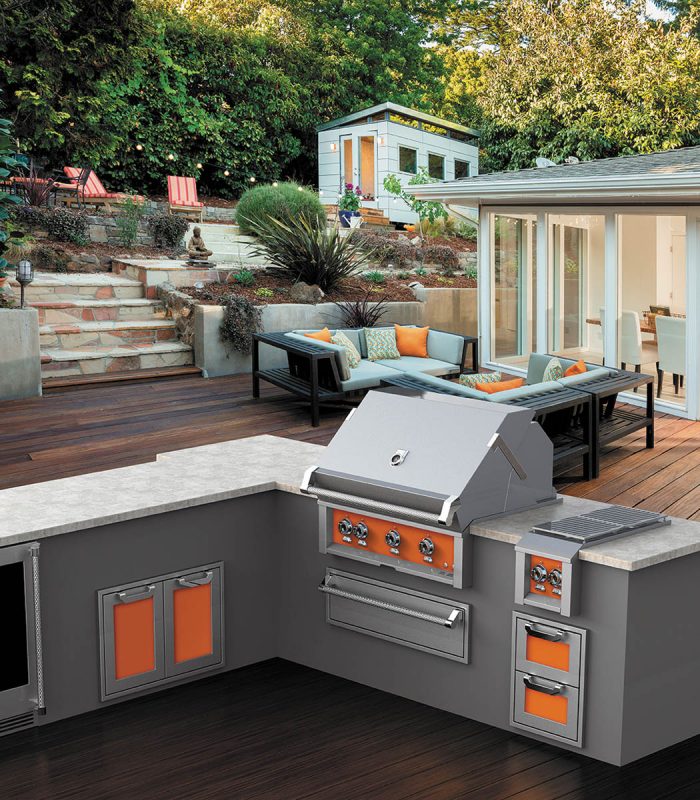
With recent innovations in the industry, designers are now producing outdoor kitchens and entertaining areas that have every bit as much functionality, character, and flow as that of the kitchens located in the property’s principal buildings. “We place a great amount of importance on being nimble with our design,” says Alicia. “We’ve come to recognize that whether the job is traditional design with a matte finish or a modern design with a high-gloss finish, the end goal is the same: First, design a space that meets the customer’s functional requirements, and then match it with a design that suits their individual tastes.”